
What Is Soffit and Fascia? Why They Matter for Wichita Homes
A couple springs ago, I got a call from a homeowner near College Hill. They said, “My gutter is falling off, but the gutter guy said it’s not the gutter.” That sounded odd… until I got there.
The gutter wasn’t the real problem. The fascia board behind it was soft like wet cardboard. The gutter spikes had nothing solid to hold onto. The fix wasn’t just “hang it back up.” The fix was fascia repair first, then a clean gutter re-install.
So here’s the simple answer right up front:
- Fascia is the board along the edge of your roof where your gutters attach.
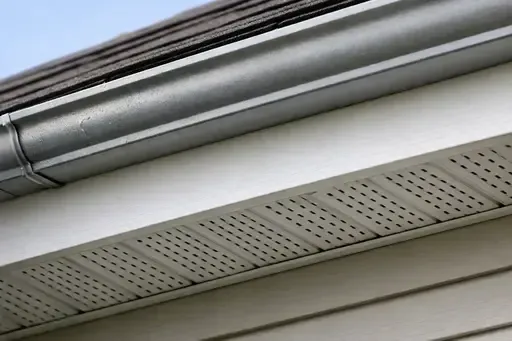
- Soffit is the panel under the roof overhang (the “ceiling” of your eaves).
Soffit and fascia matter because they help hold your gutters, move air through your attic, and block water and critters from getting into your roofline—stuff Wichita weather loves to test.
Soffit vs. fascia
If you’re standing in your driveway looking up at the roof edge, the fascia is the front-facing board along the edge. It’s the part the gutter sits against and fastens into.
The soffit is underneath that overhang. If you can look up and see panels under the edge of the roof, that’s the soffit.
On a lot of Wichita homes, fascia is wood that’s wrapped in aluminum. Soffit is often vinyl or aluminum, and sometimes it’s vented with little holes or slots. Those vents are there for a reason, not just decoration.
Why Wichita homes take soffit and fascia damage
Wichita doesn’t have gentle roofline weather. In spring, storms can dump heavy rain fast, and wind can shove that rain sideways. In summer, heat bakes paint and dries out wood. In fall, leaves and cottonwood fluff pack into gutters and corners. In winter, wet wood swells, then freezes, then dries and cracks. Over time, that cycle finds weak spots.
I’ve seen a lot of homes around Riverside and Delano where fascia has been patched more than once. It can look fine from the yard, but one hard rain shows you what’s really happening. When water starts running behind the gutter instead of inside it, fascia is usually the first thing that pays the price.
What fascia actually does
Fascia has a simple job, but it’s a big one. It gives your gutter a solid board to attach to, it helps close off the roof edge, and it supports the “line” where water is supposed to flow neatly into the gutter.
When fascia starts to fail, most homeowners don’t notice the fascia first. They notice the gutter. The gutter looks wavy, or it sags, or one corner keeps dripping. Sometimes the fasteners keep backing out. Sometimes the paint starts peeling in long strips right along that roof edge. If you ever press lightly on exposed wood and it feels soft, that’s a bad sign.
A homeowner out near Andover once told me, “It only leaks in one corner.” They were right. But the reason it only leaked there was because years of small overflow kept hitting the same spot. It’s like a steady drip on a wooden cutting board. The wood doesn’t get a chance to dry, so it breaks down.
My honest opinion is this: if the fascia is soft, don’t pay to “re-hang” the gutter and hope for the best. That’s like trying to screw into crumbly drywall with no stud. It might hold for a bit, but it won’t hold when Wichita gets a heavy rain and that gutter fills up.
What soffit does (and why it matters more than people think)
Soffit isn’t just there to make the house look finished. It helps protect the underside of the roof edge, and on many homes it also helps with attic airflow.
If your soffit is vented, it lets fresh air in low so hot, moist air can move out through higher vents. When that airflow is blocked or missing, people often notice the attic feels hotter in summer and more damp in winter. Sometimes you’ll smell that musty “old attic” smell. Sometimes you’ll even see dark spots on the wood inside the attic, and that can be a clue that moisture is hanging around too long.
Soffit also helps block pests. If there’s a loose panel or a gap, you’ve basically left a small door open. Birds, squirrels, and wasps don’t need a big opening to move in.
I heard one story from a homeowner near Maize who thought their AC was rattling. It turned out to be squirrels in the soffit. A panel had slipped just enough to create a gap. That one tiny opening turned into noise, damage, and a whole weekend of “what is that sound?” frustration.
Soffit also matters during Wichita storms because rain doesn’t always fall straight down. Wind drives rain sideways, and a solid soffit helps keep that water from getting pushed up into the roofline.
How soffit, fascia, and gutters all work together
Your roof edge works like a simple water pathway. The roof sheds water, the metal edge and flashing help guide it, the gutter catches it, and downspouts move it down and away. When one part is failing, the other parts get punished.
The most common situation we run into goes like this. Gutters clog with leaves, shingle grit, or cottonwood fluff. Water backs up and spills over. Some of that water goes right behind the gutter. Fascia stays wet and starts to rot. The gutter loosens because the board behind it is weak. Then water starts dumping right next to the house, right where you don’t want it.
Yes, this can turn into concrete and foundation problems
This is where people say, “It’s just a gutter,” and then later they’re staring at a crack in the concrete and wondering when it started.
When gutters and fascia fail, water often lands along the base of the home. Over time, that can wash out soil or keep it too wet. Soil is what supports your driveway edges, walkways, patios, and even parts of your foundation. If the soil keeps moving, concrete can settle and crack.
You might see cracks near driveway corners, sinking along a sidewalk edge, damp spots along a garage wall, or basement seepage if you have a basement. It’s not always one big dramatic event. A lot of times it’s small water problems happening over and over.
My opinion is simple: even the best concrete work can get messed up by bad drainage. Fix the water path first. If your downspouts dump right at the foundation, that’s also where underground drainage can make a real difference by moving that roof water out to a safer spot in the yard.
Want a quick soffit/fascia check?
If you’re in Wichita, Derby, Haysville, Maize, or Andover, and you’ve noticed sagging gutters, peeling paint along the roof edge, stains on the soffit, or puddles hugging the foundation, it’s worth getting the roofline checked before it turns into a bigger repair.
When you call a local gutter and siding crew, ask for a quick look at the fascia condition, the soffit panels and vents, the gutter slope, and the downspout discharge plan. Those four things usually tell the story fast.
Give us a call at (316) 350-7115 and we will come out same day!
Repair or replace? Here’s how we decide
If the damage is small and limited to one spot, fascia repair can be enough. This is common when overflow has been hitting one corner for a long time but the rest of the run is still solid.
If the wood is soft in multiple places, or the gutter keeps pulling away in more than one spot, replacement is usually the smarter move. It costs more upfront, but it stops the cycle of paying for the same problem again and again.
In Wichita, a lot of homes do well with new fascia boards that are then wrapped in aluminum. The wrap helps shed water and cuts down on scraping and painting later.
Soffit is similar. If one panel is loose from wind, a repair makes sense. If several sections are sagging, or vents are missing or blocked, replacement is usually the cleaner fix. If your attic runs hot and your soffit isn’t vented, adding vented soffit can help with airflow when it’s paired with the right exhaust venting up top.
Here's a more comprehensive guide to The cost of replacing your soffit/fasica
Wichita-specific trouble spots we see a lot
In older tree-lined areas like Riverside, cottonwood and small debris love to collect in gutter corners and around downspout outlets. It doesn’t look like much at first, but it mats up and blocks water fast.
In newer areas on the west side where rooflines can be larger, we see long gutter runs that don’t have enough downspouts. When a heavy rain hits, the gutter can’t drain fast enough, and that’s when overflow starts. Corners also take a beating in storms because they catch wind and water at the same time, and that’s where leaks and fascia rot often begin.
Seasonal tips for Wichita that actually help
In spring, it helps to clean gutters before storm season ramps up and to check for loose sections after wind. In summer, look for soffit gaps that invite wasps and check for warped vinyl. In fall, plan on at least one good cleaning after the big leaf drop. In winter, pay attention to odd icicles or drips, because they can point to water escaping the gutter path and soaking the fascia.
A quick note for commercial buildings in Wichita
Even if a building has a different roofline, the idea is the same: control the water. Commercial buildings often collect a lot of roof runoff fast, and if downspouts aren’t moving water away, you can end up with puddles near doors and walkways. That becomes a safety issue, not just a maintenance issue.
If you manage a property and you keep seeing water collect in the same places, it’s usually a drainage layout problem that can be fixed with better downspout routing, extensions, or underground drainage.
If you only do one thing after reading this
After a decent rain, take a quick walk around your house and look at the roof edge. If water is running inside the gutter and out the downspouts, great. If it’s spilling over, dripping behind the gutter, staining the soffit, or pooling at the foundation, that’s your sign something is off.
Soffit and fascia aren’t exciting. Most people don’t think about them until something starts sagging or leaking. But in Wichita weather, they do a lot of work, and when they fail, gutters can’t do their job.