
The Cost of Underground Drains in Wichita
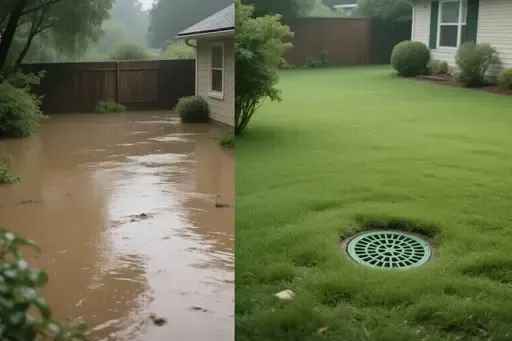
If you live in Wichita, you know the drill. Spring arrives, and so do the storms. One minute it is sunny, and the next, the sky turns green and dumps inches of rain on your lawn. Because Kansas is so flat, that water often has nowhere to go.
It is frustrating to look out your window and see a "lake" forming in your backyard. It is even scarier when that water starts creeping toward your home’s foundation.
The biggest problem in Sedgwick County is the soil. We have heavy clay soil. Clay acts like a bowl; it holds water instead of letting it soak into the ground. If you are a homeowner here, you want to protect your biggest investment—your house.
You know you need a fix, but you probably have one big question: "How much is this going to cost?"
"Underground drain" is a big term. In this guide, we will break down the prices for the most common solutions: French drains, trench drains, catch basins, and dry wells, specifically for the Wichita area.
| Drainage Type | Estimated Cost (Per Unit/Foot) | Typical Project Total | Best Used For |
|---|---|---|---|
| French Drain | $25 – $50 per linear ft. | $3,000 – $8,000 | Drying out soggy yards and protecting foundations. |
| Trench Drain | $60 – $120 per linear ft. | $2,500 – $6,000 | Stopping water flowing down driveways or on patios. |
| Catch Basin | $300 – $600 per basin | $1,500 – $3,500 | Catching water from downspouts or specific low spots. |
| Dry Well | $1,500 – $4,000 per unit | $1,500 – $4,000 | Areas where there is no slope to drain water away. |
*Note: "Typical Project Total" includes labor, materials, and disposal of soil. Prices may vary based on site accessibility.
Deep Dive: French Drains (The Gold Standard)
When people talk about yard drainage, they are usually talking about French Drains. This is the most popular way to move water away from your home.
What is it?
Think of a French drain as a "burrito" buried underground. It is a perforated pipe (a pipe with holes in it) surrounded by gravel. The whole thing is wrapped in a special filter fabric. It sits in a trench underground to catch water that is soaking into the soil.
Cost Breakdown
- Cost per Linear Foot: In Wichita, you can expect to pay between $25 and $50 per linear foot. This price changes based on how deep the pipe needs to go and what materials are used.
- Total Project Average: For a standard backyard solution, most homeowners spend between $3,000 and $8,000.
Interior vs. Exterior
It is important to know the difference. An exterior French drain goes in your yard. An interior French drain (often called weeping tile) goes inside your basement floor. Interior drains are much more expensive because they involve jackhammering concrete. This guide focuses on the yard (exterior) drains.
Why Choose It?
This is the best choice for drying out a soggy lawn and stopping water from pressing against your foundation walls.
Surface Solutions: Trench Drains
While French drains handle water underground, trench drains handle water on the surface.
What is it?
A trench drain is a long channel with a grate on top. You usually see these installed in concrete or asphalt. It acts like a gutter on the ground to catch water before it flows where it shouldn't.
Application
These are perfect for driveways that slope down toward a garage. They are also great for patios where water pools up against the back door.
Cost Breakdown
- Materials: You can buy plastic (polymer) grates or strong steel grates. Steel costs more but lasts longer under car tires.
- Installation: Trench drains are often more expensive per foot than French drains. This is because the crew has to cut concrete, dig, and then pour new concrete to hold the drain in place.
- Estimated Cost: Prices vary widely, but expect to pay a premium for the concrete work involved.
Aesthetic Options
If this is on your patio, you don't want it to look ugly. You can pay a little extra for decorative grates that look like bronze or iron to match your home’s style.
Managing the Flow: Catch Basins & Dry Wells
Sometimes you don't need a whole pipe system. You just need to catch water at one spot and move it to another.
The Catch Basin (The Collector)
A catch basin is simply a box with a grate on top. It is usually placed under a downspout or in a low spot in the yard where water gathers.
- Function: It catches water quickly and sends it into a solid pipe.
- Cost: The box itself isn't expensive. However, you rarely install just a box. The cost comes from digging the trench for the pipe that carries the water away.
The Dry Well (The Destination)
A dry well is a large underground tank or a big pit filled with gravel. It gives the water a place to sit while it slowly soaks back into the earth.
The Wichita Warning
You have to be careful with dry wells in Wichita. Remember our clay soil? Clay drains very slowly. If you dump a lot of roof water into a dry well, it might fill up faster than it can drain. If that happens, it will overflow.
- Cost: A plastic dry well tank costs more upfront than a gravel pit, but it holds more water. Installation requires digging a very large hole, which adds to the labor cost.
Material & Labor Breakdown
When you get a quote, you are paying for two things: materials and the hard work to install them.
Materials: The Pipe Matters
- Corrugated Pipe: This is the black, crinkly pipe. It is cheaper, but it is not the best.
- PVC (SDR 35): This is smooth, rigid green or white pipe.
- Why pay more? In Wichita, the ground freezes and thaws a lot. This movement can crush the cheap black pipe. Rigid PVC is stronger and easier to clean out later. It is worth the extra cost.
Gravel & Fabric
You need "clean" rock (rock without dust) and non-woven geotextile fabric. This fabric lets water through but keeps the dirt out. This is essential for keeping your system running for a long time.
Labor Rates
Digging is hard work. Drainage crews in the Midwest have to cover their insurance, equipment (like excavators), and fair wages.
- Disposal Fees: When you put a pipe and gravel in the ground, you have leftover dirt. Hauling this heavy clay away to the dump costs money, and this is often included in your quote.
DIY vs. Professional Installation
Can you do this yourself to save money? Yes, but you should know the risks.
The DIY Appeal
The biggest benefit is saving on labor costs. If you have a strong back and free weekends, you can save thousands.
The Risks
- Incorrect Slope: Water only flows downhill. If you don't get the angle right (at least a 1% drop), the water will sit in the pipe or flow backward.
- Wrong Pipe: Using the wrong pipe can lead to crushed lines or clogged systems.
- Physical Toll: Digging Kansas clay by hand is grueling work. It is heavy, sticky, and hard to move.
When to Hire a Pro
If the drain needs to go very deep, is very long, or is close to your foundation, hire a professional. One mistake near your foundation can cause leaks in your basement.
Wichita Specifics: Permits and Regulations
Before you start digging, there are a few local rules to follow.
Call Before You Dig
This is the most important rule. You must call Kansas 811 a few days before you dig. They will come out and mark your gas, electric, and fiber optic lines for free. Hitting a gas line is dangerous and expensive!
City of Wichita Codes
If you need to cut the curb to let water into the street, or if you are connecting to a city storm sewer, you will likely need a permit from the City of Wichita.
Discharge Rules
Be a good neighbor. You cannot legally point your drain pipe so that it floods your neighbor's property. In many areas, you also cannot drain directly onto a public sidewalk because it creates an ice hazard in winter.
Conclusion
Fixing drainage problems isn't the most exciting way to spend money, but it is necessary. While the upfront cost of French drains, trench drains, or catch basins can feel high, it is much cheaper than paying for foundation repair later.
A dry yard also adds value to your home. It means you can actually use your backyard after a storm without wearing rain boots!
Ready to dry out your yard?
Give us a call, (316) 350-7115, or get a quick estimate with our cost calculator
Protect your home and enjoy your lawn, rain or shine!