
9 Signs Your Home Needs an Underground Drain System
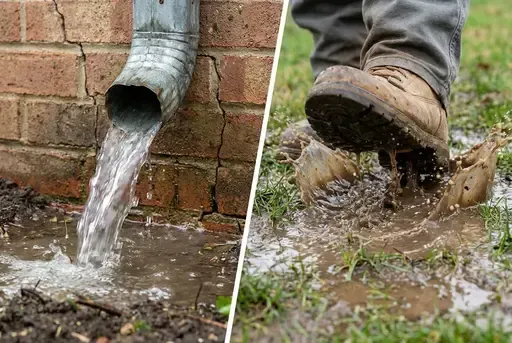
Water problems rarely start with a huge flood. Instead, they start with small clues. You might smell something musty in the basement, see a puddle that won’t go away, or notice soggy patches on your lawn. These little signs can quietly damage your home over time.
If you ignore them, water can hurt your foundation, ruin your landscaping, and even cause mold inside your house. The good news is that there is a solution. Underground drains—like French drains, trench drains, and downspout lines—are designed to catch water and move it away from your home before it causes trouble.
Whether you live in an area with heavy clay soil, lots of rain, or melting snow, managing water is key to protecting your property. This guide is for homeowners who want to keep their basements dry and their yards looking great.
1) What "Underground Drains" Mean
Simply put, an underground drain is a buried system of pipes. Its job is to catch rainwater or groundwater and move it to a safe place away from your house.
Because these systems are buried, they look much better than pipes laying on top of the grass. They also work better because they stop erosion and keep water away from your foundation.
Here are the most common types you might hear about:
- French drain system: A perforated pipe (pipe with holes) buried in gravel and wrapped in fabric to soak up groundwater.
- Downspout underground drain: A solid pipe that connects to your gutters to move roof water far away.
- Trench drains: Grates you see in driveways or patios to catch surface water.
- Catch basins / Yard drains: A box with a grate on top, usually placed in a low spot in the yard to act like a bathtub drain.
2) Top Signs Your Home May Need an Underground Drain System
How do you know if you need one? Here are the top 9 signs to look for.
Sign #1: Water pooling near the foundation after rain
If you see puddles forming right next to your house, or if the dirt there stays dark and wet for days, you have a problem.
- Why it matters: When water sits against your house, it pushes against the walls. This can cause cracks and leaks.
- The fix: French drains or downspout extensions can move this water away.
Sign #2: Basement or crawl space dampness
Does your basement smell musty? Do you see white powder (efflorescence) on the concrete walls or mold spots in corners?
- Why it matters: This means water from the outside is trying to get inside.
- The fix: An exterior French drain system is often the best way to stop groundwater from touching your walls.
Sign #3: Your sump pump runs frequently
If you have a sump pump, listen to it during a storm. If it turns on and off constantly, it means the soil around your house is full of water.
- Why it matters: Your pump is working overtime to save your basement. If the power goes out, you could flood.
- The fix: Underground drains can reduce the amount of water reaching your sump pump.
Sign #4: Downspouts dump water right next to the house
Take a look at your gutters. Do the downspouts end right at the bottom of the wall?
- Why it matters: Roofs collect a lot of water. Dumping it right next to your foundation is the #1 cause of basement leaks.
- The fix: Install downspout underground drains. These solid pipes take the water and release it safely further out in the yard.
Sign #5: Erosion or washed-out mulch
After a heavy rain, do you find your garden mulch washed onto the sidewalk? Do you see exposed tree roots?
- Why it matters: This means water is moving too fast across your yard. It is stripping away your topsoil.
- The fix: Trench drains or catch basins can slow the water down and capture it.
Sign #6: Soggy lawn or standing water
If you have a spot in your yard that stays squishy for 24 to 48 hours after rain, the soil can’t drink the water fast enough.
- Why it matters: This ruins grass, creates mud pits for pets, and breeds mosquitoes.
- The fix: A yard drain or a French drain in that specific low spot helps dry it out.
Sign #7: Cracks in foundation, driveway, or patio
Concrete is strong, but water is stronger. If water gets under your driveway and freezes, it expands and cracks the concrete.
- Why it matters: These cracks will only get bigger over time, leading to expensive repairs.
- The fix: Keep the soil under the concrete dry with underground drains.
Sign #8: Water flows toward the home
Look at the slope of your yard. Does the ground tilt toward your house instead of away from it?
- Why it matters: Gravity will always pull water to the lowest point. If that point is your house, you will have leaks.
- The fix: You need to intercept that water with a French drain or catch basin before it reaches your walls.
Sign #9: Gutters overflow even when they are clean
Sometimes, a heavy storm dumps water faster than your gutters can handle.
- Why it matters: This water spills over the edge and lands right on your foundation.
- The fix: You may need larger underground drain lines to handle the heavy flow from the roof.
3) Local Factors That Make Drains Necessary
Where you live plays a big role in how well your yard drains. For example, soil type is a major factor; clay soil holds water like a bowl, while sandy soil lets it drain away easily. If you have heavy clay, you are much more likely to need help moving water. The shape of the land matters too. If you live at the bottom of a hill or slope, your neighbor's runoff naturally flows down to become your problem.
Weather patterns and your specific neighborhood layout also contribute to drainage issues. Areas with heavy spring rains, rapid snowmelt, or hurricane seasons need stronger systems to handle the volume. In cities with tight lots, houses are often close together with lots of concrete driveways and patios. This leaves very little grass to soak up the rain, forcing the water to pool or run toward the foundation.
4) Choosing the Right Type of Drain
Not all drains do the same job. You have to match the drain to the problem.
A) French Drains (For Groundwater)
- Best for: Soggy soil, wet foundations, and water seeping out of a hillside.
- How it works: It’s a perforated pipe buried in gravel. It acts like a sponge to soak up water from the ground.
B) Trench Drains (For Surface Water)
- Best for: Driveways, in front of garage doors, and on patios.
- How it works: It’s a long grate that catches water flowing across concrete so it doesn't enter your garage or home.
C) Yard Drains / Catch Basins (For Low Spots)
- Best for: That one spot in the lawn that always looks like a pond.
- How it works: It’s a box with a grate that sits flush with the grass. It catches the puddle and sends it down a pipe.
D) Downspout Underground Drain Lines (For Roof Water)
- Best for: Moving the massive amount of water that comes off your roof.
- How it works: Solid pipes connect to your gutters and carry water to a "pop-up emitter" or a safe exit point far away.
5) Quick At-Home Checks Before Calling a Pro
You can do a little detective work yourself before hiring help. The next time it rains, put on your boots, grab an umbrella, and walk the property. Draw a simple map of where the water starts and where it pools. While you are out there, check the gutters to see if they are overflowing or if the downspouts are aiming water right at the house.
Once the rain stops, take a closer look at your foundation walls. You want to look for "tide lines," which are dark stains or white powder near the bottom of the wall that indicate water has been sitting there. Finally, try the "squish test." Walk your yard the day after a storm. If the ground is still squishy under your feet, the soil isn't draining properly.
6) Common Mistakes to Avoid
If a drain isn't installed right, it won't work, so it helps to know the common pitfalls. The biggest mistake is installing pipes with no slope. Water only runs downhill, so if the pipe is flat, water will sit inside, grow algae, and eventually clog. It is also critical to install cleanouts so you can maintain the system if leaves get inside, and to use the correct filter fabric to prevent dirt from clogging the pipe.
Another serious mistake involves illegal connections. In most places, it is against the law to connect your rain drains to the sanitary sewer (the pipe for your toilet). Doing this can overwhelm the city system and cause sewage backups for the whole neighborhood. Always make sure your water discharges to a safe, legal spot in your yard or a storm drain.
7) What Installation Depends On
You might be wondering about the effort involved in getting a system installed. It isn't a "one size fits all" job, and the complexity depends on several things. The length of the pipe run matters, as does the difficulty of the digging. For example, digging through rocky soil takes much longer than digging through sand, and navigating around tree roots, sidewalks, or driveways adds time to the project.
Local rules also play a part, as some cities require permits to modify drainage or connect to storm sewers. While installing a proper underground drain system is an investment, it protects your foundation and saves you from much more expensive repairs later on.
Conclusion
Water is a powerful force, but you can control it. If you are seeing pooling water, damp basements, erosion, or soggy lawns, don't wait. These are signs that your home needs help.
Underground drains—whether it's a French drain for groundwater or a downspout line for roof rain—are a durable fix, not just a temporary patch. Next time it rains, take a look around. If you see the signs, it might be time to call a drainage professional to keep your home dry and safe.