
How Long Do Gutters Last in Wichita’s Climate?
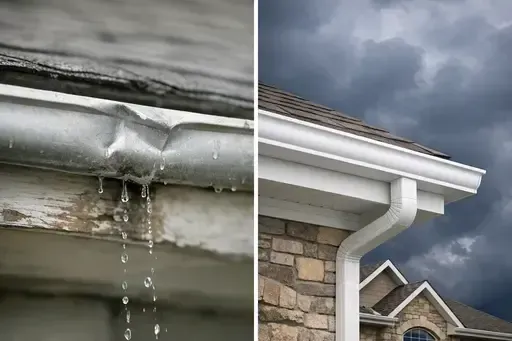
Picture this: it is a Tuesday night in late April. The sky over the neighborhood turns that eerie, bruised shade of green, the thunder rattles your living room windows, and a heavy spring downpour starts hammering your roof. As you sit safely inside on the couch, listening to the wind howl, you might find yourself wondering, is my home actually protected from all this water?
We rarely think about our roof drainage systems until something goes wrong and water is spilling over the edges like a broken fountain. But knowing the average lifespan of your residential system is crucial. These metal channels are the unsung heroes of your home. They quietly do the heavy lifting to keep your foundation solid, your basement dry, and your roofline free from rot.
If you own a home here in the local area, you already know how important it is to protect your property value and avoid massive water damage bills. Living here means dealing with a truly unpredictable climate. We get baked by intense summer heat, battered by severe spring hail and wind storms, and frozen by winter ice. These wild weather swings put a massive amount of extra stress on your home's exterior. Let's talk about how long your system can actually survive these extremes, what materials work best, and what you can do to help them last longer.
If your home has suffered from water damage, see our gutter repair and Gutter installation services, as we would be happy to help!
How the Unpredictable Climate in Wichita KS Affects Your Gutters
Living in Wichita KS is always an adventure, especially when it comes to the weather forecast. One day you are wearing shorts to a backyard barbecue, and two days later you are scraping a thick layer of ice off your windshield. This rollercoaster climate does more than just confuse our weekend plans; it actively attacks your home’s exterior day in and day out.
Let's start with the wind. Out here on the plains, the wind doesn't just blow; it roars. Those intense, straight-line winds that sweep across the state can easily grab hold of loose edges. Over time, the constant tugging and vibrating loosens the hidden metal fasteners and pulls the system away from your home's wooden fascia board. Before you know it, a whole section is hanging on by a single screw.
Then comes the spring storm season. Spring in Kansas means thunderstorms, and thunderstorms frequently bring hail. Imagine someone standing on your lawn throwing golf balls at your roof for ten minutes straight. That heavy hail can dent, crack, or completely compromise the structural integrity of the system. Even small dents are a problem because they create low spots where rainwater pools up instead of flowing smoothly down to the drain.
Finally, we have to deal with the brutal winter freeze-thaw cycle. Snow melts on your roof during a sunny afternoon, runs down to the edges, and then freezes solid when the sun goes down and temperatures drop. This creates massive ice dams. Ice is incredibly heavy. It acts like a concrete block, weighing down the troughs, warping the metal, and pulling the whole system away from the roofline. When you combine the summer heat, the high winds, the hail, and the heavy ice, it is easy to see why our local weather is the ultimate test for your home.
The Average Lifespan of Different Types of Gutters
So, with all that intense weather beating down on your house year after year, how long can you expect your system to hold up? The answer really depends on the materials you choose to install. Not all gutters are built the same, and picking the right material makes a huge difference in how long they survive our local climate.
Aluminum (Lasts about 20 years):
This is by far the most popular choice for homeowners today, and for good reason. Aluminum is very lightweight and naturally resists rust, which is fantastic for our heavy rain seasons. Because it doesn't rust, it can easily last two decades if kept clean. However, because aluminum is a slightly softer metal, it is definitely susceptible to those nasty hail dents we talked about earlier.
Galvanized Steel (Lasts 20 to 30 years):
If you want something a bit tougher, galvanized steel is a solid step up. These
gutters are highly durable against flying tree branches and strong winds. They hold their shape incredibly well. The trade-off? Because they are made of steel, they can eventually rust over time. If the protective zinc coating gets scratched by debris, heavy rain and sitting snow will cause rust spots to form.
Copper (Lasts 50+ years):
Copper is the ultimate luxury option. It looks absolutely beautiful, adding a unique, high-end charm to your home as it ages and turns a classic green color—just like an old penny. It is highly durable in absolutely all weather conditions, never rusts, and can last a lifetime. The only catch is the price tag; it is a very expensive, premium option.
Vinyl (Lasts 10 to 20 years):
Vinyl is often the cheapest option upfront at the hardware store, but it really struggles in our specific climate. Think about a plastic toy left out in the yard all year. The plastic material becomes brittle and is prone to snapping during our freezing winter nights. Then, it can warp and bend when baked by the intense summer sun. While they might save you a few dollars today, vinyl
gutters usually need replacing much sooner than any metal option.
Common Signs You Need Gutter Repair Before the Next Storm
You never want to wait until water is actively flooding your basement to realize you have a drainage problem. Catching small issues early is the secret to protecting your home and your wallet. Here are a few clear signs that you need a professional gutter repair before the next dark cloud rolls into town.
Visible Sagging or Pulling:
Step back into your yard and look up at your roofline. Do the horizontal troughs look like they are dipping in the middle or leaning away from the house? This sagging is often caused by the heavy weight of winter ice dams or years of wet, rotting leaves sitting in the channel. Once they start to pull away from the wood, they need immediate re-securing before a strong wind rips them off completely.
Leaks and Water Marks:
Take a walk around the outside of your house the day after a rainstorm. If you see dark water marks on the wood right behind the system, or if you notice puddles of water pooling on the ground right next to your foundation, you have a problem. This usually points to failing seams or stubborn clogs that are forcing water to spill over the wrong edges. Water sitting at your foundation can cause the concrete to crack over time.
Rust and Peeling Paint:
Do you notice any orange rust spots on the metal, or peeling exterior paint on your home's siding? That means water is constantly overflowing or sitting stagnant where it shouldn't be. Constant moisture will slowly eat away at your home's exterior paint and wood.
The good news? Getting a timely gutter repair can save you a ton of stress. Fixing a loose hanger, sealing a leaky corner, or re-sloping a sagging section today can save you from needing a premature, full replacement tomorrow.
When is it Time for a Full Gutter Replacement?
Sometimes, a simple fix just isn't enough. There comes a point where patching up old problems is like putting a tiny bandage on a broken leg—it just doesn't solve the real issue. So, how do you know when it is finally time to stop patching and invest in a full gutter replacement?
Beyond Repair:
Every home system has a tipping point. If you find yourself constantly calling someone out to patch new leaks, reattach sections that keep sagging, or replace rusted bottoms, you are throwing good money after bad. When the cost of constant, annoying repairs starts adding up year after year, a fresh, brand-new installation is simply more cost-effective and gives you peace of mind.
Severe Storm Damage:
Mother Nature can sometimes make the decision for you. A massive spring hail storm or a close call with high-speed winds can crush your system overnight. In these cases of sudden, severe damage, an immediate
gutter replacement is necessary to protect your home from the very next rainstorm. The silver lining here is that this kind of sudden, severe storm damage is often covered by your homeowners insurance policy.
Upgrading to Seamless:
If your old sectional system is failing, it is the perfect time to upgrade. Moving to seamless gutters is a total game-changer for homeowners. Instead of snapping small pieces together like a puzzle, seamless systems are custom-cut from one continuous piece of metal right in your driveway. Because there are no joints or seams in the middle of the run, there are far fewer places for leaks to start. This gives you much better durability and reliable water flow in the harsh Kansas weather.
Conclusion
To wrap things up, while a standard aluminum system generally lasts about 20 years, our extreme local weather can significantly alter that timeline. From blistering summer heat to heavy winter ice and spring hail, your home's exterior takes a serious beating year after year.
The real secret to getting the most life out of your system is proactive maintenance. Keeping them clean, clearing out the fall leaves, and fixing small issues early will help them protect your foundation and roof for decades.
Don't wait until the next big thunderstorm to find out your system is failing. As a locally owned and operated business right here in town, Wichita Gutters is here to help. I'm Brandon, and my team and I have over 10 years of experience protecting homes just like yours across Wichita, Derby, Andover, and beyond. Give us a call today at (316) 350-7115 to schedule a professional inspection, a quick repair, or to get a free, same-day quote for a replacement. Let's make sure your home is ready for whatever the Kansas skies throw our way!